
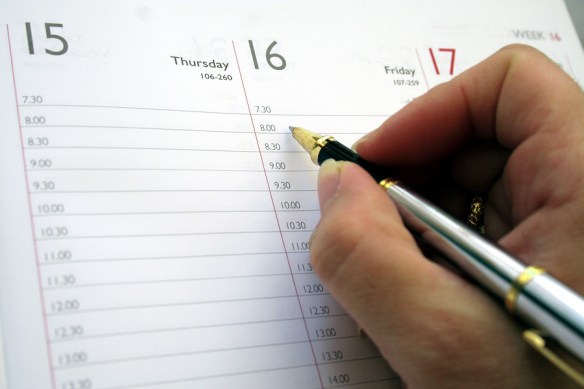
Using a paper planner in this digital age can have some unique advantages. Using a planner that works for you, can help to keep you more organized and productive, which in turn enables you to complete tasks more efficiently. A planner can also help you to declutter your task list and keep on top of appointments and this in turn helps to manage your stress and mental health! Sometimes writing everything down, planning your day, and staying organized can actually help to boost motivation as well. And what feels better than checking everything off of your To Do list by the end of the day!
For such a seemingly small purchase, a planner is a big commitment. It’s your personal assistant for one full year, so it’s important to choose correctly so you don’t miss out on the most important things in your life. But there are so many options. How do you know which planner is right for you? We’ve broken down some important pieces of choosing a planner below!
First – think about how you like to plan – some things to think of:
Do you plan out every minute or do you just need to know when certain appointments fall?
Do you depend on lists?
Do you set goals? Do you want to start setting them?
Do you have a routine? If not, do you want to create one?
What isn’t working with your current planner, if you use one?
How portable would you like it to be?
Think about how you want it bound.
Do you want to be able to move things around? Do you like the idea of a bound, journal like book or does a spiral bound planner appeal to you?
How do you want it to look?
Remember, it’s what you’ll be looking at for a whole year or longer. So consider the style. Think about color, texture, picture or graphic. Do you want to be able to change the cover easily or not?
Some Types of planners:
Daily vs. Weekly
If you want an hour-by-hour view of your day, a daily planner is right for you. It will keep all of your appointments in one easy-to-find place. But if you’d rather take a quick scan to see what’s on for today without breaking it down hour-by-hour, a weekly planner is what you need.
Bullet Planner
Whether you need to get a better handle on your to-do list or want an outlet to help you relax, a bullet journal can help. Think of it as a next-level diary for not only writing but also drawing. Instead of blank, lined pages, or dated pages, a bullet journal contains sections to log daily to-dos, keep a monthly or weekly calendar, jot down notes, track both physiological and mental health, and record both short- and long-term goals.
Some features to think about:
Tabs
Need to flip ahead and see what’s coming up in October? Or do you want to keep your business and personal separate? Look for a planner with tabs. With a glance and a flip, you will quickly find the section you need.
Pockets
For the person with print-outs, receipts and business cards in every jacket, purse or wallet, a planner with pockets is right for you. It will keep all of your important documents in one place.
Note Fields
It’s the all-purpose planner. If you cringe at carrying an armful of notebooks, calendars and planners to the meeting, look for a planner with lots of note space.
Size
Want to journal, stay organized and keep contacts in one place? Go for a large planner. It may seem hefty to lug around, but when you consider all of the items you won’t need anymore — like a date book and note pad — it’s actually a concise way to go. If you want something that can fit into your clutch, forgo the extra features and look for a simple daily or weekly planner.


 Office Plus Blog