Ways to Save Printer Ink


At the office, waste cutting equals cost cutting. By reducing the amount of supplies you use or how you use them, you can help the bottom line and feel better about your ecological footprint.

But, where should you start? There are lots of ways to make your workplace into a green office but today, let’s talk about an everyday essential: printer ink. Every office uses it but few use it efficiently.

To get started, try these five ways to save printer ink!

  • Change your font. Last year, a teen discovered that the US government could save over $400,000,000 just by changing the font on their documents! The most efficient fonts? Century Gothic, Ecofont and Times New Roman.
  • Change your settings. Most printers have a draft or Economode option in the presets. Switch it on to save ink each and every time you print.
  • Mind your pages. It’s a simple step that takes mere seconds: select only the pages you require. Often, the last page of a document includes banners or fine print that you’ll end up tossing in the trash. Be mindful before you hit Ctrl + P.
  • Simple errors lead to re-printing. Spell-check your document and, if possible, ask for a peer edit before printing.
  • Your spelling and grammar line up. Now, does your format? Hit the preview button before you print to be sure your layout in aligned.

Happy printing!
Why you really DO need Surge Protectors


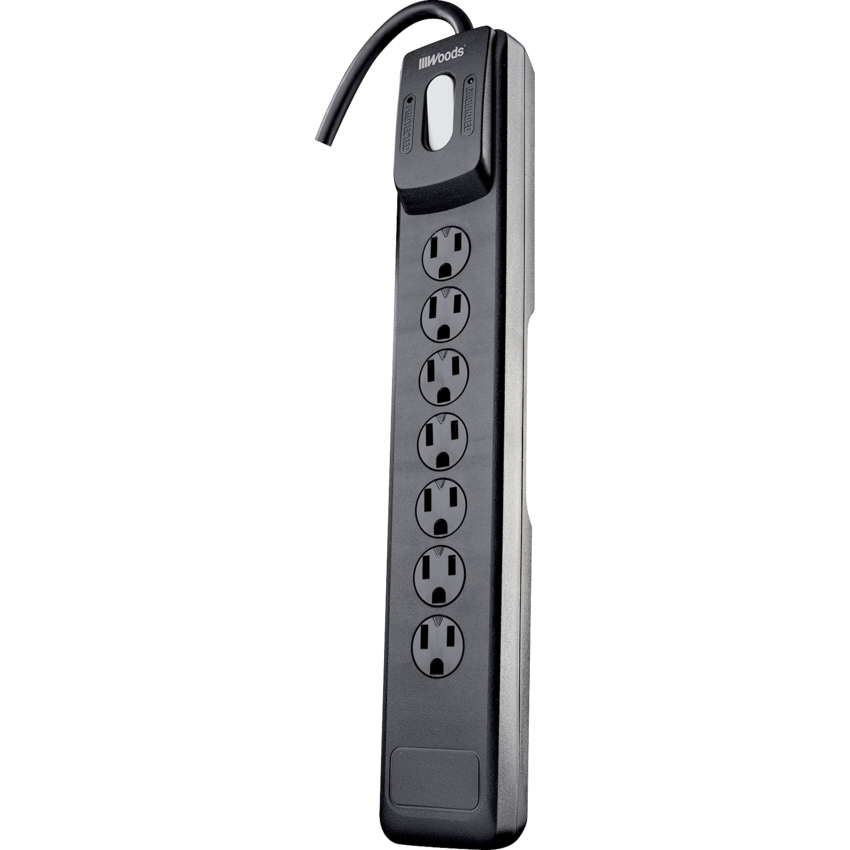
Although surge protectors may look like a power strip, don’t be fooled in thinking they offer the same benefits.  A power strip adds extra outlet space to power your electronics, whereas a surge protector actually helps protect your electronics from voltage spikes.  What causes voltage spikes and are they really that common?  Well, events like lightning strikes, power outages, and other grid malfunctions cause voltage spikes, and yes, they happen very frequently. 

7-Outlet Surge Suppressor/Protector

Now, not all electronics need a surge protector (although there’s no harm if you do choose to use one).  Using one on a lamp, for example, isn’t necessary because the only damage a power surge running through a lamp could do is burn out its lightbulb.  However, it is crucial to use a surge protector on devices such as laptops and computers as they contain voltage-sensitive components that a power surge could easily damage, and without a surge protector, a power spike or power surge could actually shorten the life of your device, wipe out all of your data, or even completely destroy your system. 

Ok, great, so you’ve connected a surge protector to all your critical electronic devices and you’re feeling great that your electronics are safe and protected and now you don’t need to think about it anymore.  Well, not quite.  Surge protectors do need replacing every couple of years because as they take a power hit, it slowly diminishes its life.  Unfortunately, with most surge protectors you can’t tell if it’s providing full protection or not, so it’s best to be proactive and replace it.  A good surge protector can last about three to five years (depending on amount/strength of surges).


Ready to start protecting your electronics?  We have a variety of surge protectors to suit your various needs!

Source: https://earlybirdelectricians.com/blog/why-surge-protectors-are-needed/

Supplies You Need for a Power Outage


As any Canadian will tell you, power outages aren’t seasonal. From ice storms to heat waves, a power outage can happen at any time. And while we can’t predict when one will happen, we can prepare for it.

Power Outage Supplies

The most important thing to have during a power outage? An emergency preparedness kit. Sure, most outages last mere minutes, but many of us have experienced that days- or even weeks-long blackout. For such times, turn to these five supplies for information, comfort and survival.

Supplies You Need for a Power Outage

  • During an emergency, wifi and cable might go out but the radio will always be there. A radio will keep you in the loop and may provide life-saving information during major emergencies.
  • Flashlights and lanterns. During a power outage, the last thing you need is an injury from stumbling around in the dark. Flashlights and lanterns aren’t just for convenience, but for safety.
  • Phone chargers. The conventional ones won’t work, so look for battery-powered backup chargers to keep you connected to friends and loved ones during a power outage.
  • Without batteries, radios, flashlights and some back-up phone chargers are useless. Keep a good range of sizes — from AAA to D — and you’ll be able to power any appliance.
  • No-heat meals. Your stove won’t work. Your freezer and refrigerator should stay closed to keep food from spoiling. Keep a few fully-cooked canned goods — and a manual can opener — to ensure you don’t go hungry.

For more tips on how to thrive during a power outage, visit Get Prepared.