Why are ergonomics important at the workplace?


You’ve heard about the benefits of an ergonomic workstation. But you might have asked yourself, what exactly does that mean.

Ergonomics is a design-oriented science. An ergonomic object — be it a keyboard or chair — is easy to use and promotes efficiency. By definition, an ergonomic workstation is crafted with intention, combining all elements to most benefit its user.

How important is an ergonomic workspace?

If your workstation is poorly suited to you and your needs, it can cause undue stress on your body and mind. Because we spend so much time at work, this repetitive stress can lead to injury and illness. An ergonomic workspace prevents the stress that can lead to longterm health issues.

Because every body is unique, you must adjust your ergonomic equipment to get proper support. This takes some effort, but the people over at CNET have you covered with a comprehensive guide. In just a few minutes, you can set up a workspace that promotes better posture, blood flow and productivity.
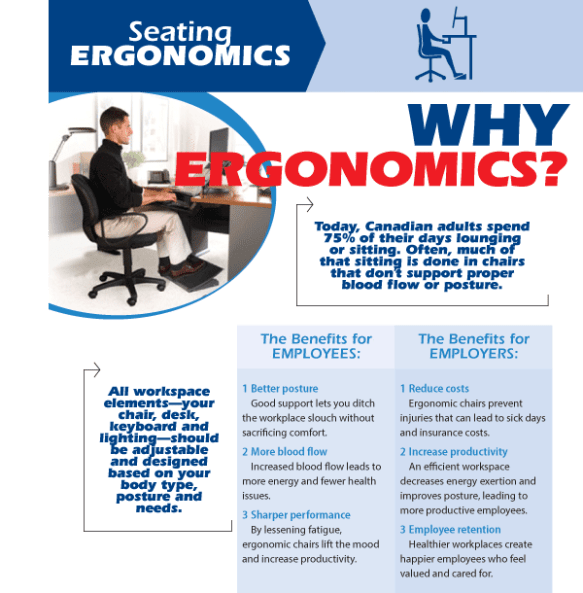

Ergonomics at the workplace

How to Balance Exercise, Work and Family


For majority of adults, incorporating any sort of exercise routine that will yield desirable results is often challenging. Most of a regular day is spent at work, and with the overwhelming popularity of sedentary jobs, few of us get the necessary activity required for a healthy lifestyle. The remaining time is often used to balance family, friends and responsibilities. Hence why it may be hard to stick to a serious exercise routine or achieve a long-term training goal.

Exercising at the Office - Balanced Lifestyle

Fortunately, we stumbled across great tips from the Mio blog to help you incorporate exercise into a busy lifestyle:

If possible, add cardio to errands

  • If you’re going to the grocery store to grab a loaf of bread or need a haircut try walking or running instead of commuting. Pick and choose the errands that make most sense for your time and exercise goals.

Cycle to work

  • You’ve read that right: try cycling to work instead of driving. We spend a good chunk of our time getting to and from work, why not use it as exercise?

Work from home

  • Plenty of organizations are introducing telecommuting (or working from home). If you have such an option, use the time that would be allocated for commuting to fit in exercise.

Exercise while you work

  • Joining a webinar where you don’t have to speak? Have a longer than usual lunch break? All of these times can be used for exercising. Getting a group of co-workers together for lunch walks or runs is a great way to get everyone at the office moving.

Get up early

  • If you can make any extra time in the mornings before work or family responsibilities, add an exercise routine. It is a great way to get your body going for the rest of the day.

Involve the kids or family members

  • If you have kids make sure they are a part of your exercise schedule. They do not have to follow a rigorous training session, but they can walk, run or try other forms of activity suitable for their age. Same goes for parents, partners or siblings – find a common exercise that you can share together and get moving!

For a full list of tips visit Mio’s article here.

How to Prevent Burnout & Minimize Mental Fatigue


We recently came across a blog post covering mental fatigue and how it can lead to burnouts at the workplace. While mental fatigue is normal to some extent, it is important to not let it reach extreme levels where performance, well-being and focus are affected.

Prevent Burnout at Work

According to the article there are 4 ways to reduce mental fatigue:

1. Play some mindless cell phone games

Spending 10 to 15 minutes on a mindless activity such as easy to follow cell phone games can give our brains a reboot, allowing it to take a break from the daily demands at work.

2. Walk for pleasure, not exercise

When we think of walking for exercise we think of sweating, increased heart rates and distance covered. Taking a walk outside of the office to catch local scenery or to get some fresh air can take the stress out of exercise goals and let your mind settle.

3. Cultivate a positive attitude

Regardless on the amount of projects or tasks you face each day, it is important to focus on the positives in your life. Try keeping a journal, writing down positive things and getting out of bed on the “right foot” each morning. It can make a significant difference for your mental health.

4. Delegate (or at least ask for help)

While many of us are responsible for multiple roles at our workplace it does not necessarily mean that we have to do everything all of the time. If you have the ability to delegate some work, do so. Likewise, if you just need a helping hand on a big project try partnering up with a co-worker so that you can help each other out during busy periods.


Do you use any of these tools to keep your mind healthy? Have any tips not mentioned above? Let us know in the comment section!